
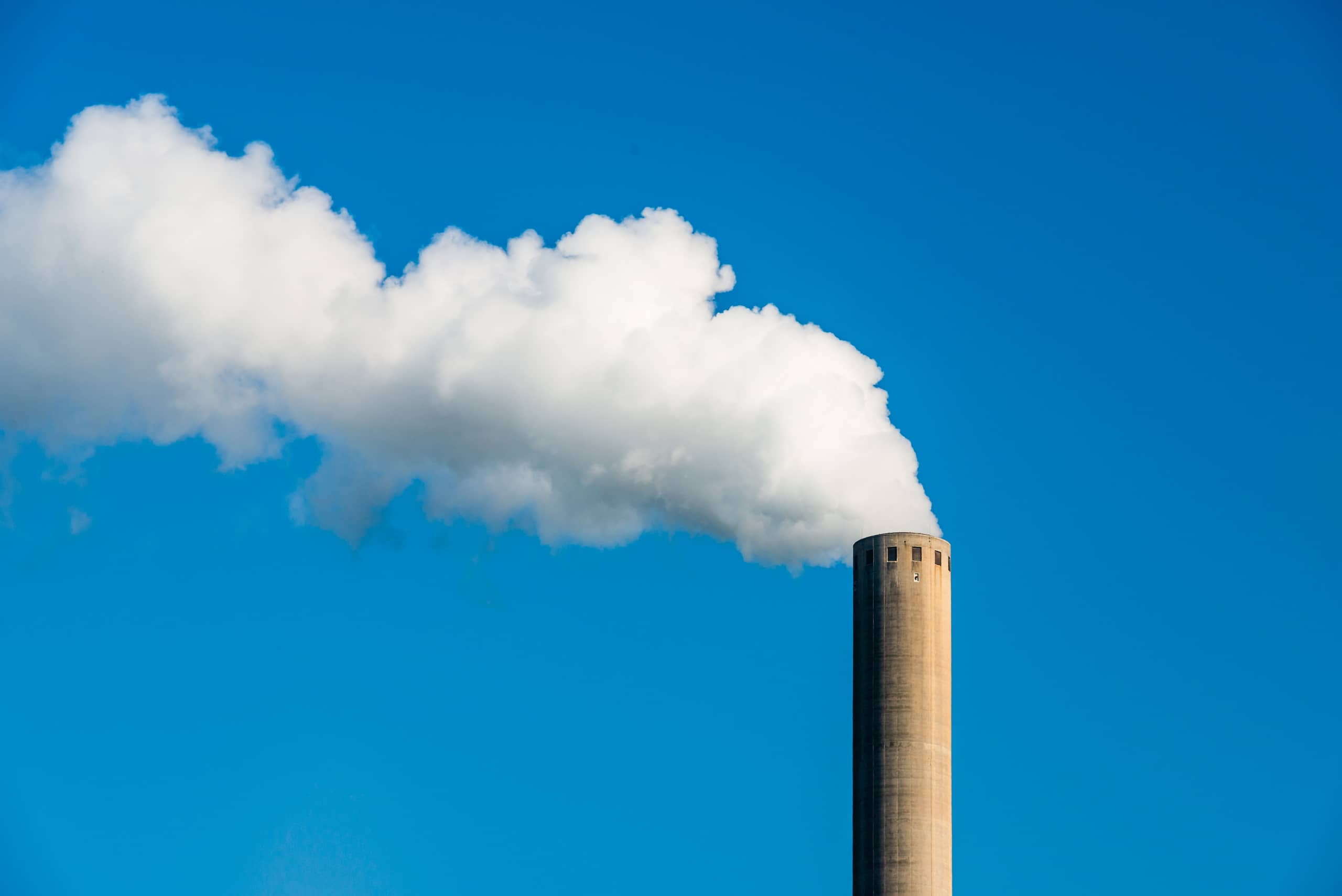
The annual emission figures published by the Dutch Emissions Authority (NEa) show that CO2 emissions in the Netherlands under the EU ETS rose by 2.3% to reach 72.0 megatons in 2025. Much of this rise was driven by the energy sector, where more electricity was produced primarily for foreign export.
Meanwhile, other sectors achieved gains: the aviation sector saw reduced emissions thanks to its use of biofuels. Preliminary figures for the maritime sector also suggest a fall in emissions. The contrasts between the different sectors show that, despite the overall increase, there are also some positive developments to report. Across the whole of Europe, there was a 1.3% fall in total emissions. However, much more progress will be needed to achieve the national climate targets for 2030, says the NEa.
Higher electricity production triggered by export demand
Emissions in the energy sector rose for the first time since 2015, by some 3.5 MT CO2e (a 15% rise compared to 2024). This is primarily because the Netherlands produced more electricity for foreign export. Production was disappointing in other European countries, due in part to maintenance work on Belgian power plants, less wind off the German coast and low water levels leading to a reduction in the supply of hydropower in Austria and Switzerland.
Slightly more than half of the additional CO2 emitted (1.9 MT) was from coal-fired power plants, despite the fact that one of the four such plants in the Netherlands (the Amercentrale) has been banned from using coal since last year. Much of the remaining rise in emissions can be attributed to the increased combustion of natural gas and, to a lesser extent, waste gases from industry.
Lower production in industry
Emissions from the chemical industry fell by 1.3 MT CO2e in 2025. Two major facilities accounted for a remarkable proportion of this fall: Chemelot (-0.9 MT) and DOW Benelux (-0.3 MT). Both featured in the news last year when they shut down facilities on their sites. The fall in emissions can therefore largely be attributed to a decline in production. Emissions from oil refineries and other stationary installations saw no change compared to the previous year.
Aviation sector improves sustainability through use of biofuels
Fossil emissions in the aviation sector within the EU ETS fell by 4% compared to the previous year, to almost 3 Mton CO2. This decline is due to a fourfold increase in the use of sustainable aviation fuels (SAFs), to almost 166 KT.
This peak in SAF consumption is due to the introduction of the ReFuelEU blending mandate for fuel suppliers and the fact that these supplies could still be booked as Renewable Fuel Units in 2025[1]. As a result, the use of biofuels was especially advantageous for aviation in 2025. This is no longer possible from 2026. The NEa anticipates that the use of SAFs will fall again slightly after 2025, while still exceeding pre-2025 levels.
Lower emissions expected for maritime sector
Emissions in the maritime sector are expected to fall slightly to 7.1 MT CO2eq in 2025,[2] down from 7.4 MT CO2eq in 2024. This complicated target group, accounting for a total of 1,600 vessels (reference date 17 April), experienced a turbulent year. Geopolitical tensions and changes to trade flows affected emissions, making it difficult to interpret the figures. Ships were more likely to avoid the Red Sea and the Suez Canal, leading to longer routes and increased emissions.
However, these preliminary figures still suggest a slight fall. The main reasons for this are not yet fully clear. The NEa will provide more detailed interpretation when the full analysis of the final figures has been completed.
Positive signs
Mark Bressers: “The increase in CO2 emissions seen in 2025 makes it clear that there is still a lot of work to be done to achieve the government's climate targets. But there are still some positive signs. European emissions are falling, for example. Much of the rise seen in the Netherlands can be attributed to the increase in electricity generation to contribute to the European energy supply. The ETS does not set national emissions targets, but was actually designed with a view to enabling this type of cross-border exchange. Moreover, emissions from the aviation sector are down. The maritime sector, only recently included within the ETS, has also been better this year at meeting its reporting obligation. At a time when the principles of the ETS and carbon pricing are increasingly under question, these trends actually demonstrate the value of carbon pricing as the cornerstone of climate policy.”
[1] In a few weeks’ time, the NEa will publish figures and context on the use of biomass in energy, industry, shipping and aviation.
[2] By 17 April 2026, verified emission reports had been submitted by 85% of the target group. The figure for total emissions was then calculated by means of linear extrapolation.